
Η Katherine Mansfield (1888-1923) υπήρξε πρωτοπόρος του μοντερνισμού. Παρά τον πρόωρο θάνατο της στην ηλικία των τριάντα τεσσάρων ετών, αναμόρφωσε το σύγχρονο διήγημα. Γεννημένη στη Νέα Ζηλανδία, εγκαταστάθηκε οριστικά στην Ευρώπη το 1908 αναζητώντας την πνευματική ελευθερία μακριά από τους κοινωνικούς περιορισμούς της πατρίδας της. Το έργο της επικεντρώνεται στην εσωτερικότητα και την ψυχογραφία των ηρώων, καθιστώντας την μία από τις πιο επιδραστικές φωνές της παγκόσμιας λογοτεχνίας.
Mansfield, Katherine. “Leves Amores.” The Penguin Book of Lesbian Short Stories, edited by Margaret Reynolds, Penguin Books, 1994.
Μετάφραση από την αγγλική γλώσσα: Μαρία Τρούμπα
Translated by Maria Troumpa
«Ανάλαφροι Έρωτες» “Leves Amores” (1907)
Ποτέ δε θα ξεχάσω το ξενοδοχείο Θιστλ. Ποτέ δε θα ξεχάσω αυτή την παράδοξη χειμωνιάτικη νύχτα.
Της ζήτησα να δειπνήσει μαζί μου, και μετά να πάμε στην Όπερα. Το δωμάτιό μου ήταν απέναντι από το δικό της. Είπε πως θα έρθει αλλά – μήπως θα μπορούσα να σφίξω τα κορδόνια του μπούστου της, έχει γάντζους στο πίσω μέρος. Πολύ καλά.
Ήταν ακόμη μέρα όταν χτύπησα την πόρτα της και μπήκα. Φορούσε μόνο ένα μεταξωτό κομπινεζόν καθώς πλενόταν, τρίβοντας το πρόσωπο και τον λαιμό της με ένα σφουγγάρι. Είπε πως τελείωνε, πως μπορούσα να κάτσω στο κρεβάτι και να την περιμένω. Έτσι, κοίταξα γύρω μου, το μουντό αυτό δωμάτιο. Το μοναδικό, βρωμερό παράθυρο έβλεπε στον δρόμο με θέα το θαμπωμένο από σκόνη παράθυρο ενός απέναντι πλυσταριού. Από έπιπλα, το δωμάτιο είχε ένα χαμηλό κρεβάτι σκεπασμένο με αποκρουστικές, κίτρινες κουρτίνες με σχέδια από κλήματα, μια καρέκλα, μια ντουλάπα με έναν ραγισμένο καθρέφτη, ένα νιπτήρα. Η ταπετσαρία, όμως, έβγαζε μάτι. Κουρελιασμένες λωρίδες κρέμονταν από τον τοίχο. Στα σημεία που δεν είχαν ξεβάψει και ξεθωριάσει τόσο, μπορούσα να διακρίνω τριαντάφυλλα — μπουμπούκια και άνθη — και η ζωφόρος είχε ένα κλασσικό σχέδιο με πουλιά, τι πουλιά ένας Θεός ξέρει.
Εδώ έμενε λοιπόν. Την κοιτούσα με περιέργεια. Τραβούσε το μακρύ, λεπτό καλσόν της, και έλεγε “διάολε” όταν δεν έβρισκε τις ζαρτιέρες της. Και μέσα μου ένιωσα μια σιγουριά πως τίποτα όμορφο δεν θα μπορούσε να συμβεί σε αυτό το δωμάτιο, και για εκείνη ένιωσα περιφρόνηση, λίγη ανοχή, ακόμη λιγότερη λύπηση.
Ένα μουντό, γκρίζο φως ταλαντευόταν πάνω απ’όλα · σαν να ήθελε να τονίσει την κακογουστιά των ρούχων της, τη μιζέρια της ζωής της, ακόμη και αυτή η ίδια φαινόταν μουντή και γκρι και κουρασμένη. Και καθόμουν στο κρεβάτι και σκεφτόμουν ” Αχ, τα Γηρατειά. Έχω ξεχάσει το πάθος. Η υπέροχη χρυσαφένια πομπή της Νιότης με προσπέρασε. Τώρα αντικρίζω τη ζωή από τα καμαρίνια.”
Έτσι, δειπνήσαμε κάπου και πήγαμε στην Όπερα. Ήταν αργά όταν βγήκαμε στον γεμάτο κόσμο νυχτερινό δρόμο, ήταν αργά και έκανε κρύο. Μάζεψε τη μακριά της φούστα. Αμίλητες, πήραμε τον δρόμο της επιστροφής για το ξενοδοχείο Θιστλ, διασχίζοντας το λευκό μονοπάτι με τα χρυσαφένια κρίνα, ανεβαίνοντας τη σκοτεινή σαν αμέθυστο σκάλα.
Ήταν η Νιότη νεκρή;… Ήταν η Νιότη νεκρή;
Διασχίζοντας το διάδρομο προς το δωμάτιό της, μου είπε πως χάρηκε που ήρθε η νύχτα. Δε ρώτησα γιατί. Και εγώ χάρηκα. Έμοιαζε σαν μυστικό μόνο δικό μας. Έτσι, πήγα μαζί της στο δωμάτιο να ξεκουμπώσω αυτούς τους εκνευριστικούς γάντζους. Άναψε ένα κεράκι σε ένα εμαγιέ κηροπήγιο. Το φως σκέπασε το δωμάτιο στο σκοτάδι. Σα νυσταγμένο παιδί ξεγλίστρησε από το φόρεμά της και, ξαφνικά, γύρισε προς το μέρος μου και άπλωσε τα χέρια της γύρω από τον λαιμό μου. Όλα τα πουλιά στην ανάγλυφη ζωοφόρο ξαφνικά ξεκίνησαν να κελαηδάνε. Όλα τα τριαντάφυλλα στη κουρελιασμένη ταπετσαρία μπουμπούκιασαν και άρχισαν να ανθίζουν. Ναι, ακόμη και τα κλήματα στην κουρτίνα του κρεβατιού άρχισαν να σχηματίζουν στεφάνια και γιρλάντες, και μπλέχτηκαν γύρω μας σε μια πυκνόφυλλη αγκαλιά, μας κράτησαν σφιχτά με χιλιάδες βλαστάρια.
Και η Νιότη δεν ήταν νεκρή.
Επίσης δείτε: https://hotems.enl.uoa.gr/hotel-intimacies-deferred-james-joyce-and-katherine-mansfield/
Original Text
“Leves Amores” (1907)
I can never forget the Thistle Hotel. I can never forget that strange winter night.
I had asked her to dine with me, and then go to the Opera. My room was opposite hers. She said she would come but – could I lace up her evening bodice, it was hooks in the back. Very well.
It was still daylight when I knocked at the door and entered. In her petticoat bodice and a full silk petticoat she was washing, sponging her face and neck. She said she was finished, and I might sit on the bed and wait for her. So I looked round at the dreary room. The one filthy window faced the street. She could see the chocked, dust-grimed window of a wash-house opposite. For furniture, the room contained a low bed, draped with revolting, yellow, vine-patterned curtains, a chair, a wardrobe with a piece of cracked mirror attached, a washstand. But the wallpaper hurt me physically. It hung in tattered strips from the wall. In its less discoloured and faded patches I could trace the pattern of roses – buds and flowers – and the frieze was a conventional design of birds, of what genus the good God alone knows.
And this was where she lived. I watched her curiously. She was pulling on long, thin stockings, and saying ‘damn’ when she could not find her suspenders. And I felt within me a certainty that nothing beautiful could ever happen in that room, and for her I felt contempt, a little tolerance, a very little pity.
A dull, grey light hovered over everything; it seemed to accentuate the thin tawdriness of her clothes, the squalor of her life, she, too, looked dull and grey and tired. And I sat on the bed, and thought: ‘Come, this Old Age. I have forgotten passion, I have been left behind in the beautiful golden procession of Youth. Now I am seeing life in the dressing room of the theatre.’
So we dined somewhere and went to the Opera. It was late, when we came out into the crowded night street, late and cold. She gathered up her long skirts. Silently we walked back to the Thistle Hotel, down the white pathway fringed with beautiful golden lilies, up the amethyst shadowed staircase.
Was Youth dead? …Was Youth dead?
She told me as we walked along the corridor to her room that she was glad the night had come. I did not ask why. I was glad, too. It seemed a secret between us. So I went with her into her room to undo those troublesome hooks. She lit a little candle on an enamel bracket. The light filled the room with darkness. Like a sleepy child she slipped out of her frock and then, suddenly, turned to me and flung her arms round my neck. Every bird upon the bulging frieze broke into song. Every rose upon the tattered paper budded and formed into blossom. Yes, even the green vine upon the bed curtains wreathed itself into strange chaplets and garlands, twined round us in a leafy embrace, held us with a thousand clinging tendrils.
And Youth was not dead.
Maria Troumpa is a final-year undergraduate student of English Language and Literature at the National and Kapodistrian University of Athens. They are interested in literary translation as well as queer and gender representation in modern and contemporary literature.
Source:
Mansfield, Katherine. “Leves Amores.” The Penguin Book of Lesbian Short Stories, edited by Margaret Reynolds, Penguin Books, 1994.
Comments:
This text has already been translated by Μπάμπης Ζησιμάτος in the anthology Έρωτες Γυναικών (1994) published by «Εκδόσεις της Γαίας». Though I was not aware of the 1994 translation while working on my own, it should be mentioned nonetheless.
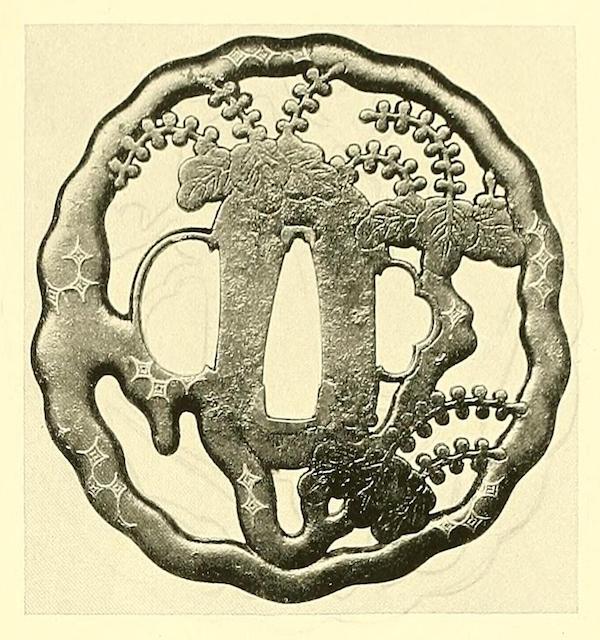
Picture Credit: Oeder, G. (1916). Tsuba made of iron, openwork, shaped like a round branch of the empress tree with three flowers and vines. Boston Public Library. https://pdimagearchive.org/images/a457ac8e-1729-459d-9612-23b68aa80a0a/


This was beautiful Admin. Thank you for your reflections.